Step one
Detection
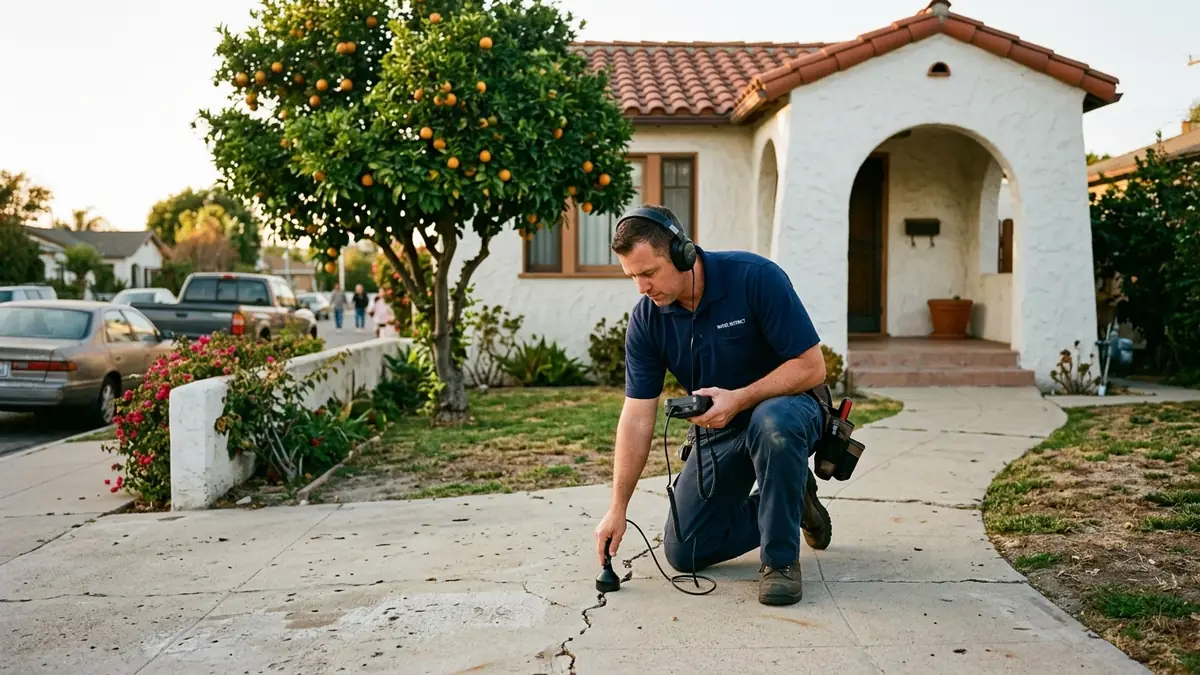
The meter check is free and comes first. What the estimated range buys is the leak located to a marked spot.
CSLB C-36 licensed work only · La Habra and its neighborhoods
(562) 689-9676Read your meter before you call anybody, including us
Leak detection in La Habra, CA, with the free checks explained before any of it — because sometimes the meter says there is nothing to find, and sometimes the bill is the problem rather than the pipe.
What a visit covers
Estimated visit$150‑400
Local crew
Local to La Habra, not a franchise call center
Local knowledge
Your bill's water provider checked first
Detection, scoped before priced
The finding written down, not a summary
CSLB C-36
License number on every written quote
Read the meter first.
The free checks explained first, and a written quote before anyone comes out.
Call (562) 689-9676
About Tracewell
Leak detection in La Habra starts with a question most people skip: which water provider sends your bill. The City of La Habra Water Division serves the city and Suburban Water Systems serves part of it, and the reading printed on that bill is worth checking against your own meter before anybody is booked.
Locating a leak in a typical La Habra house runs an estimated $150 to $400, and no local average is printed here because none has been verified. What moves the figure is how many systems have to be ruled out and how the leak has to be found — by pressure, by sound or by heat — rather than the hours on the clock.
What we do
Step one
The meter check is free and comes first. What the estimated range buys is the leak located to a marked spot.
Step two
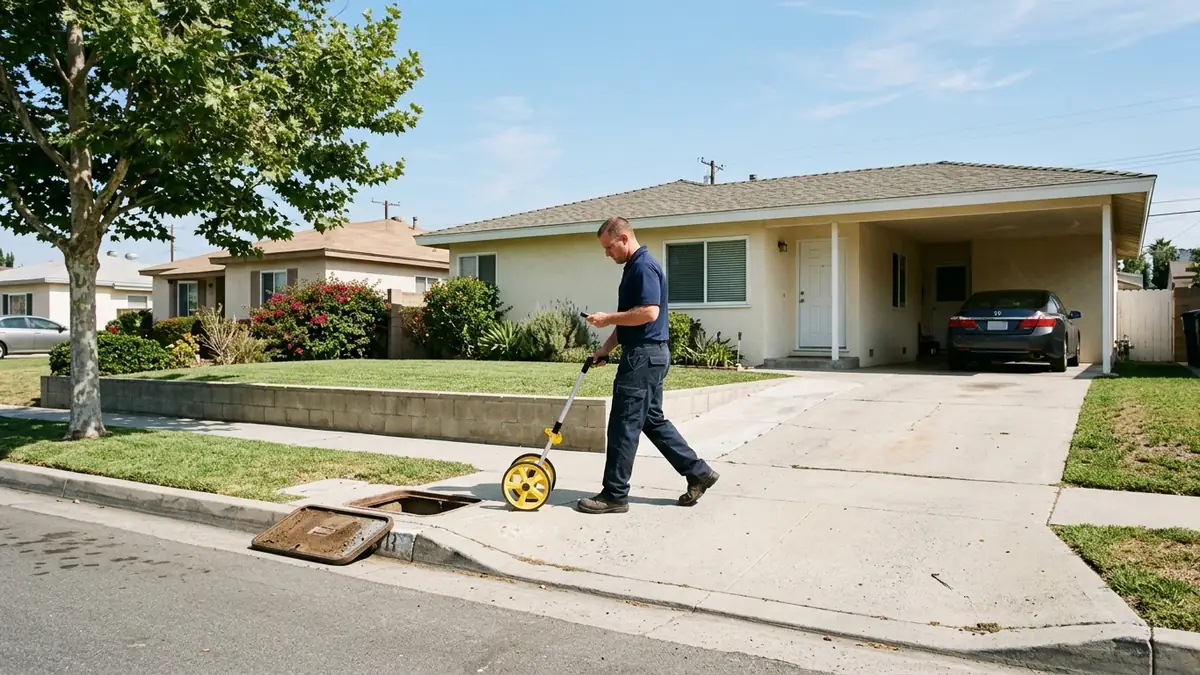
What is checked, and in what order
REQUEST A QUOTE
Complete the form and describe the work you need help with.
What we take on
These are the jobs it usually becomes, and what each one costs.
All servicesSlab Leak Detection in La Habra
Slab leak detection in La Habra needs no permit, but the repair that follows often does: opening a floor goes through the city's Building and Safety Division.
Water Line Leak Detection in La Habra
In La Habra the first call about an outside line can be to your water provider rather than to us.
Pool Leak Detection in La Habra
La Habra's hot, dry summers take a real amount of water off any pool by evaporation alone.
Irrigation Leak Detection in La Habra
In a dry climate like La Habra's, the sprinklers do much of the yard's work, and a broken line has a long season to waste water unseen.
Emergency Leak Detection in La Habra
Water running now in La Habra: close the main shutoff, then call.
Costs
Leak detection runs an estimated $150 to $400 for a typical house. What moves it is how much has to be ruled out and how the leak has to be found — by pressure, by sound or by heat — rather than the hours on site.
Leak Detection
$150 - $400
Estimated - same or next workday
Emergency Leak Detection
$150 - $400
Estimated plus out-of-hours - same day where water is running now
Slab Leak Detection
$150 - $400
Estimated - same or next workday
Every figure here is an estimated range. Your own number comes as a written quote, agreed before any work.
The route
The free checks explained first, and a written quote before anyone comes out.
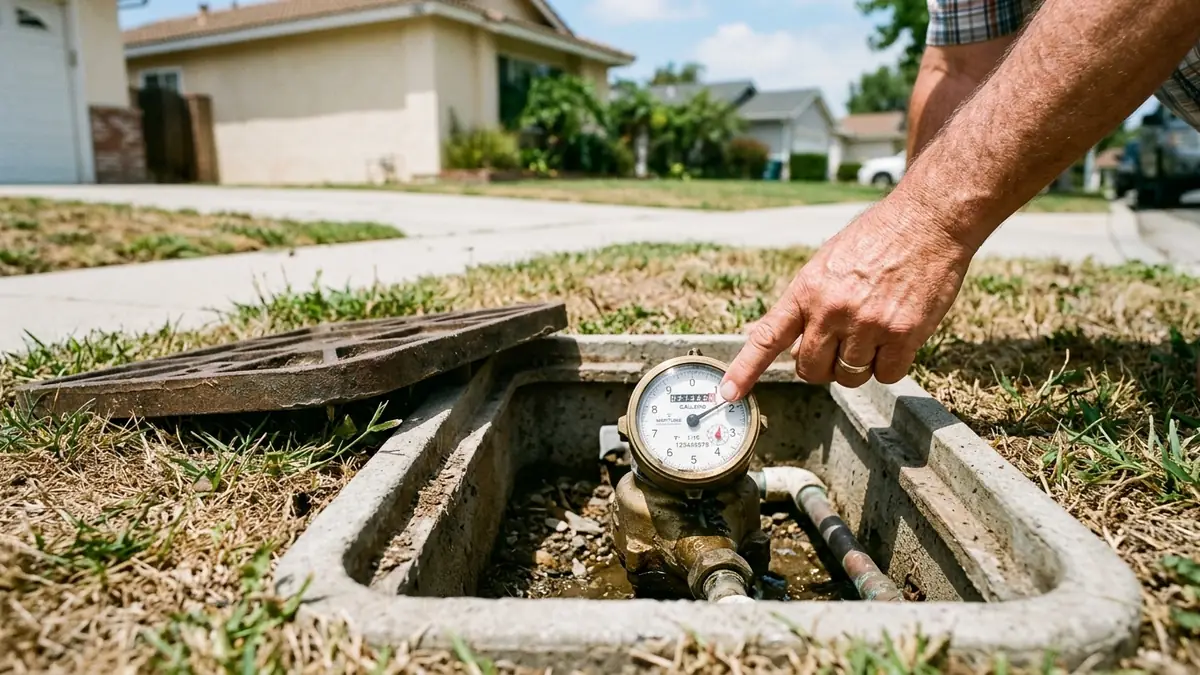
Read your meter before you call
Everything off, then watch the low-flow indicator. Still turning means something is moving; dead still through two readings means it very probably is not. Either answer is worth having before anybody quotes you, and it costs nothing.
Tell us what it did, and when the house went up
Those two answers shape the visit more than any description of the symptom. The first says whether water is moving at all; the second says whether the supply pipe is likely galvanized steel, copper or plastic, and each fails and is found differently.
We isolate before we search
Closing off sections tells us whether the loss is inside the house, in the buried line, in the irrigation or in the pool. That narrows a whole property to one system before any equipment comes out of the van.
You get the spot, in writing, with the evidence
A location marked on the floor or the ground, what was used to find it, and what we would expect the repair to involve. The finding is yours to take to anybody, and it is the thing you paid for.
Before you choose
Every one of them is about how the number is arrived at, because a total on its own cannot be checked and a method can.
What is the estimated range, and what moves it?
Both halves. Detection sits at an estimated $150 to $400 for a typical house; a figure outside that should come with its reason.
Did they ask what the meter did?
Whether it turns with everything off is the first fact in this trade, and asking takes one sentence.
Is the repair quoted separately from the locating?
It should be. A combined number hides which of two different jobs you are paying for.
Will you tell me if I do not have a leak?
The meter often answers that before anybody arrives, and a business that says so on the phone is advising against its own short-term interest.
A leak underground shows up on the bill long before the lawn
Where we work
La Habra and three of its neighborhoods: Westridge, Downtown La Habra and Montwood. Each has its own page, because the first useful question differs in each.
Questions
Something not covered here?
Put it to us by phone. Plain answers, an estimated range and nothing to sign.
Call (562) 689-9676Yes, usually without opening the wall to look. A pressure test shows which line is losing water, acoustic equipment picks up the sound of the leak through drywall and framing, and a thermal camera shows a hot-water leak as a warm streak. The wall is opened only for the repair, at the spot the evidence points to.
Isolate before you search. The meter tells you whether water is moving; the main valve at the house tells you inside or outside; the irrigation shutoff rules the sprinklers in or out; and the cold inlet valve on the water heater tells you whether an indoor leak is on the hot side. Each step is free and takes a branch off the search.
For a typical house, an estimated $150 to $400, and the figure moves with how much has to be ruled out rather than with the hours on site. No verified La Habra average exists and this site does not invent one. What you can do instead costs nothing: read your meter with everything off and tell us what it did, because that one answer narrows the visit more than any description of the symptom.
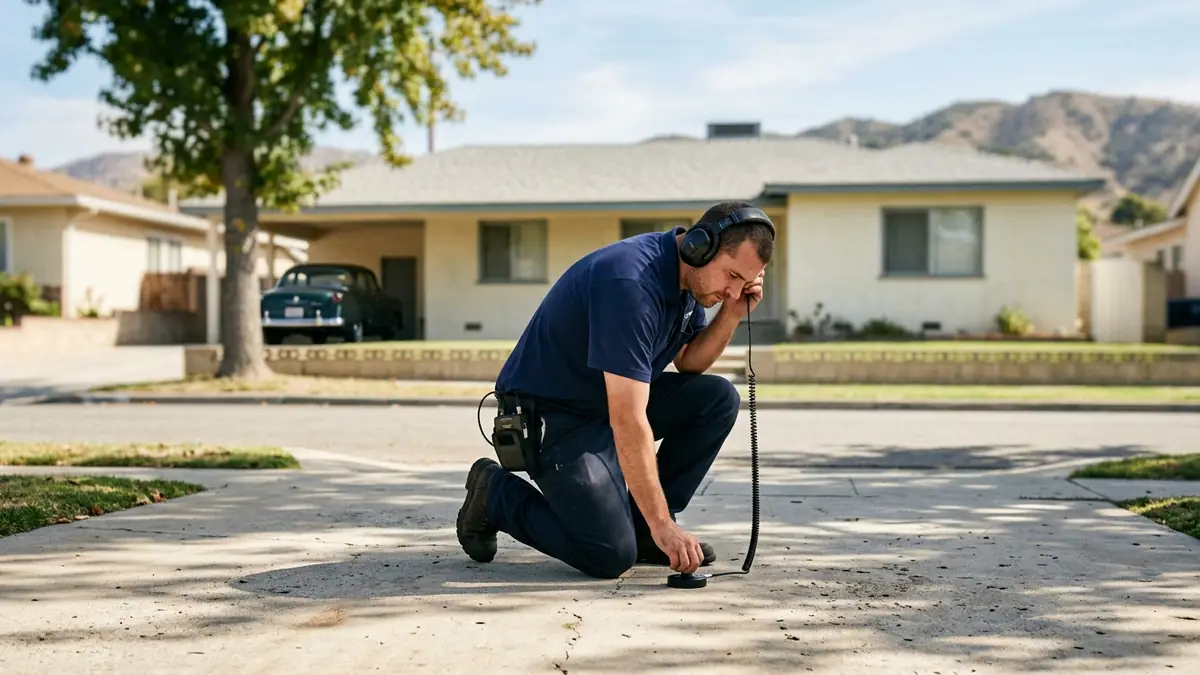
Start at the meter. Turn off every faucet and appliance and the irrigation controller, then watch the low-flow indicator, the small dial or triangle that moves on the smallest flow; a dripping faucet is too small to move it. If it turns, close the main valve at the house and watch again: still turning means the leak is outside, stopped means it is indoors. After that the equipment takes over — a pressure test to find which line is losing, a tracer to map where it runs, a ground microphone for the break, and a thermal camera when the leak is on the hot side.
Because finding the leak is the hard part, and it is what keeps the repair small. Once a leak is pinned to a spot, the repair is ordinary plumbing — a cut, a fitting, a pressure test — quoted separately. Narrowing a whole property down to that spot takes equipment and time spent isolating and listening, and it is what stands between a small opening and a dug-up yard or floor. Whether it is worth it for you depends on the meter: if it is still with everything off, you may not need it at all.
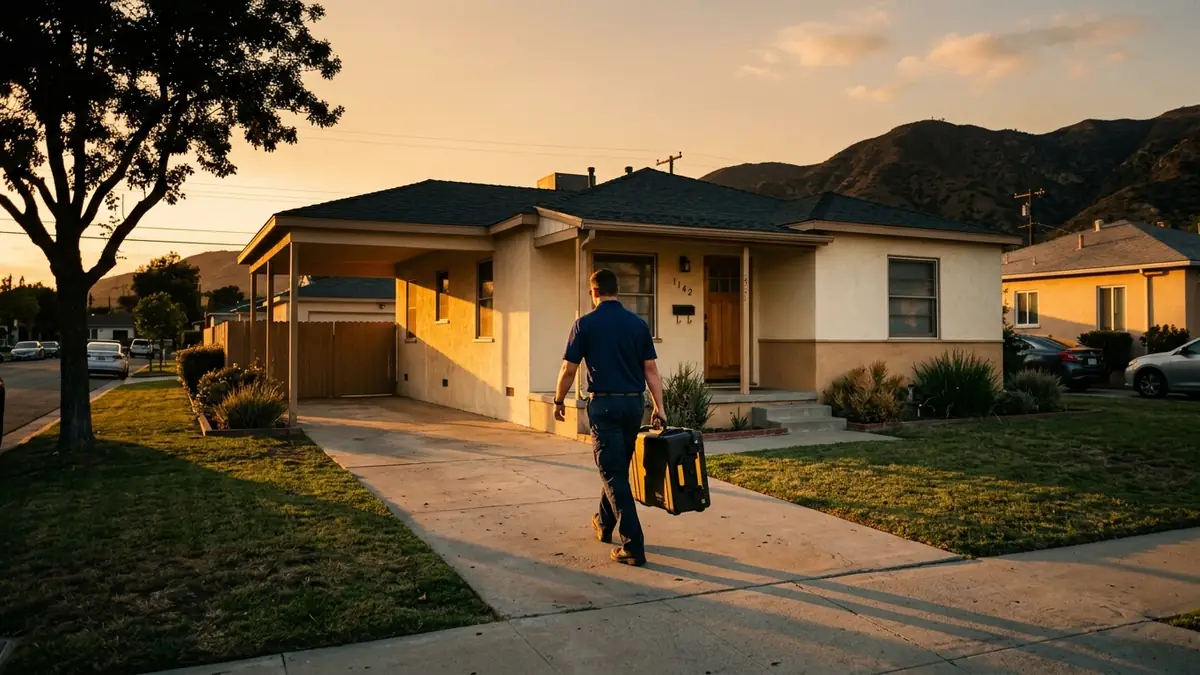
A free quote, the estimated range before we start, and a straight answer about whether you need us at all.
Talk to us
Before you call
Where we work
Every area we cover